.webp)
Build pharmaceutical communications around approved information and accurate identification
For pharmaceutical brands, packaging is not simply a space for recognition or decoration. The medicine name, strength, dosage form and other authorised information can affect how a product is identified. Primary and secondary packaging, cartons and labels should therefore be designed around source material approved by the product owner and relevant authorities. Visual hierarchy must never silently rewrite prescribed instructions, warnings or other regulated content.
Different dosage forms, pack formats, target markets and audiences change the communication brief. A family of medicines may require recognisable brand assets while still making individual strengths and products distinguishable. Corporate presentations, professional information materials and trade-exhibition graphics have additional audience and promotional considerations. The right to communicate a claim depends on the product, jurisdiction and channel, not the designer’s preference or a convincing visual concept.
Before defining the work, gather medicine details, pack dimensions, approved copy, artwork versions and responsibility for each stage of review. Ojenili can discuss brand identity, pack graphics, print-ready artwork or permitted information materials within an agreed scope. Scientific validation, legal clearance, licensing and authorisation of pharmaceutical claims remain with qualified and authorised parties. No therapeutic benefit or production capability is assumed without substantiation.
Balance medicine identification with a consistent pharmaceutical identity
The two priorities for a pharmaceutical design brief are reliable identification and a coherent visual system. Naming, strengths, dosage forms and mandated copy need appropriate visibility, while the brand should remain recognisable across cartons and labels. These requirements must be resolved together, but approval of medicine information remains separate from graphic or print production. A creative layout alone cannot establish regulatory compliance.
Make approved medicine information distinguishable across similar product presentations
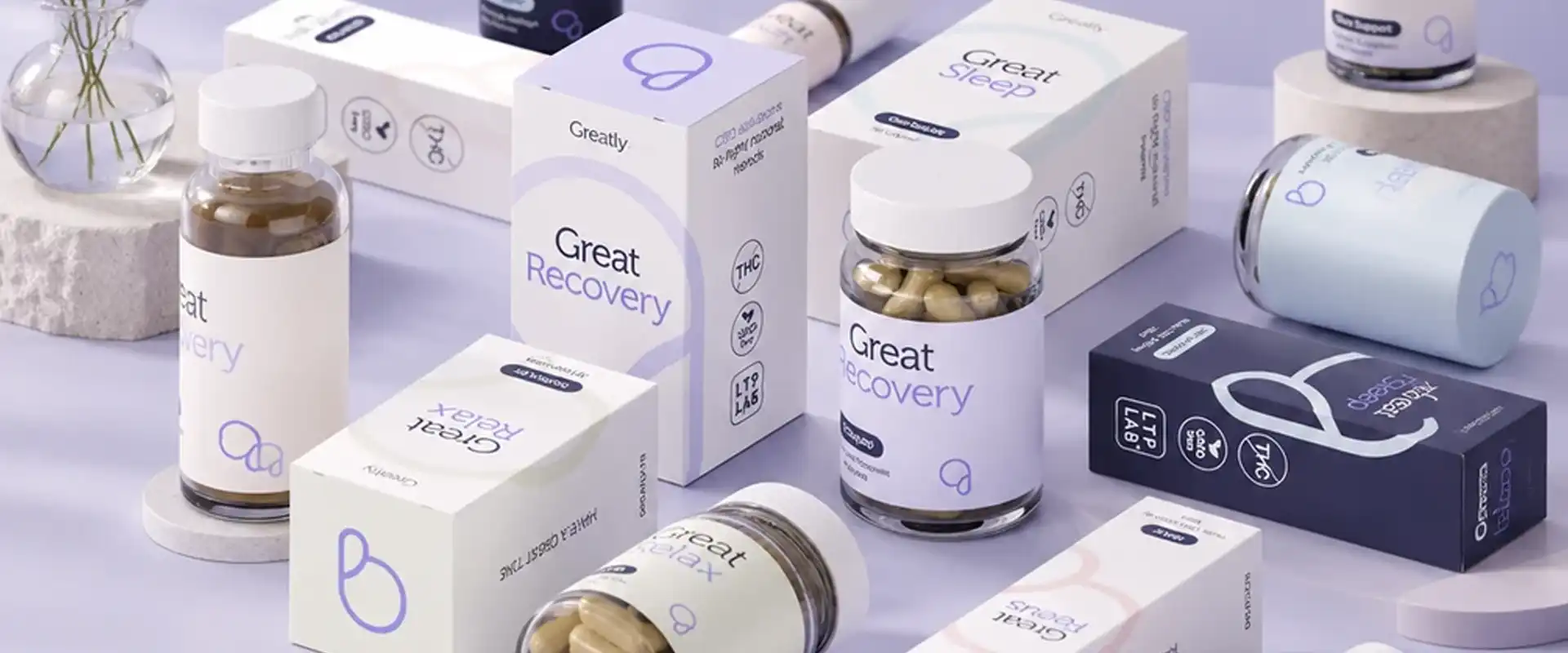
When a range contains several strengths or dosage forms, similar artwork can make it harder to recognise the intended medicine. Assess the relative prominence of authorised names, strengths, forms and mandatory statements, using actual packs and approved copy. Colour should not be the sole means of identifying products. Specialists responsible for labelling and content must review the final information hierarchy.


Coordinate brand identity with carton, label and print production requirements
A pharmaceutical identity may need to adapt to different cartons, container shapes and label areas. Document exact dimensions, print constraints, approved text and version-control requirements before approving a design family. Production files should be checked against the intended format and supplier specifications. Graphic prepress checks are important, but they are not substitutes for medical approval or mandatory regulatory review.
Decisions to resolve before medicine packaging or professional communication
The first step is to decide whether the problem concerns identification, information layout, brand consistency, prepress preparation or authorised professional communication. The same request may involve more than one deliverable, but each needs its own evidence and sign-off. Medicine promotion can be restricted by product type and destination market. These questions help frame a design enquiry without offering clinical or legal guidance.
Correct identification and approved content are essential, while regulatory requirements may constrain wording, visual emphasis and the information presented on each pack.
A consistent brand system may be possible, but individual strengths and dosage forms must remain distinguishable under approved labelling requirements.
Use only claims supported by authorised product information and accepted through the applicable approval process; design cannot create new therapeutic evidence.
No. Advertising permissions depend on local regulation, medicine classification, target audience and medium, and should be verified before publication in the relevant jurisdiction.
Once a visual design is approved, further work may still be required to match precise dimensions, print specifications and final controlled copy.
Four checkpoints for defining a pharmaceutical design project
A pharmaceutical project brief must start with source information and clearly assigned responsibilities. The product presentation, approved texts, physical packaging and intended media all affect what may be designed. Teams should also distinguish the authority that approves medicine information from the provider preparing graphics. These checkpoints help establish a practical initial scope without implying that design services include clinical review, licensing or regulatory approval.
Identify Product Presentations
Record the approved medicine name, strengths, dosage forms, pack sizes and intended markets before scoping each design variant.
Collect Approved Content
Obtain controlled copy, warnings and labelling requirements from authorised reviewers; designers must not create or amend pharmaceutical instructions.
Check Actual Print Formats
Review dimensions, dielines, substrates and supplier specifications before preparing artwork for the intended carton, label or leaflet.
Confirm Approval Responsibilities
Document who signs off content, artwork versions, prepress checks and delivery, keeping medical and graphic approvals separate.
Match a pharmaceutical communication request to an appropriate workstream
| Responsibility boundary | Evidence required | Route to assess | Organisational need |
|---|---|---|---|
| Medical and regulatory approval remains external to design | Pack samples, complete range, approved copy | Review shared identity and differentiated labelling hierarchy | Confusing visual similarity across product presentations |
| Graphic approval does not validate drug information | Approved dieline, copy and supplier specifications | Create graphics and controlled print-ready artwork | New carton or medicine label |
| Prepress review is not pharmaceutical clearance | Existing files, sizes and version register | Coordinate versions and technical artwork controls | Print assets used across several variants |
| Medicine promotion requires channel-specific permissions | Event audience, authorised messages, venue constraints | Design professional exhibition and company information materials | Corporate presence at an industry event |
| Clinical claims are not authored or approved by the designer | Authorised source documents and intended audience | Lay out approved specialist content | Information prepared for professionals |
| Manufacturing feasibility must be confirmed separately | Pack sample, dimensions, approved text and quantities | Review packaging graphics and agreed production options | New pharmaceutical pack presentation |
| Public medicine advertising is not presumed legal | Site images, organiser rules, approved messaging | Evaluate compliant environmental and display materials | Display in a permitted specialist environment |
Keep creative work separate from scientific and regulatory approval
A pharmaceutical project can involve design, technical artwork, production coordination and scientific content review. Those activities do not share the same responsibility. Designers may organise approved copy and visual structure, but cannot establish the accuracy or legal status of drug information. Similarly, acceptance of an artwork file does not automatically create a commitment to print, distribute or install it. Explicit sign-off stages protect the integrity of the brief.
Build the packaging identity and information hierarchy from authorised source documents
The pack design can improve hierarchy, consistency and identification using the final copy provided by the authorised owner. Different presentations may need distinct artwork versions and separate checks on actual cartons or containers. Any change affecting the meaning of labelling information must return to the responsible reviewer. Print materials and compatibility are assessed through separate technical processes.
Prepare permitted professional communications for clearly defined audiences and venues
Corporate displays, professional brochures and exhibition graphics should use approved material suited to their actual audience. Before design starts, verify the planned venue, permitted claims, restrictions on consumer promotion and responsibility for final sign-off. A beautiful presentation is not evidence of medicine efficacy or advertising permission. Production and installation are agreed only after feasibility and scope are reviewed.
Documents needed for pharmaceutical design and production enquiries
An enquiry should identify the medicine, approved presentations, exact deliverables and review responsibilities. A request to design a carton or professional leaflet is not enough to establish lawful content or print readiness. Where several strengths, forms or languages are involved, provide a controlled list of versions. The questions below help prepare an initial project review while keeping regulatory clearance and medical verification with the responsible specialists.
Provide actual packs, approved labelling copy, dimensions, brand assets, technical specifications and a list of presentations requiring separate artwork covering every product presentation.
Identify every strength and form, approved naming differences, mandatory text and artwork version so visual distinctions can be reviewed before layouts are finalised.
No. The responsible company and authorised specialists supply and approve pharmaceutical copy, indications, warnings and all regulated claims through the required review process.
Provide the professional audience, event requirements, approved corporate or product messages, display location and any applicable promotional restrictions before design work begins.
The estimate depends on deliverables, approved source files, distinct presentations, sign-off stages, printing needs and agreed production conditions for each agreed output.
Frequently asked questions about pharmaceutical branding and packaging
This industry page frames medicine-specific identification, controlled content and communication restrictions; the service page should explain design stages and deliverables.
No. Graphic completion does not establish regulatory clearance. The authorised product owner must arrange and document all required labelling approvals.
Not without appropriate evidence and approval. The design team should work from authorised claims rather than invent therapeutic statements in any promotional material.
Yes, where appropriate, provided the authorised names, strengths and dosage forms remain sufficiently distinguishable in the actual pack presentations after specialist approval.
No. Graphic design, prepress, manufacturing, delivery and installation are separate activities unless explicitly included in an agreed scope in the written project scope.
Permission depends on the medicine, market, target audience and venue. No general right to advertise pharmaceuticals should be assumed before any artwork is placed.